


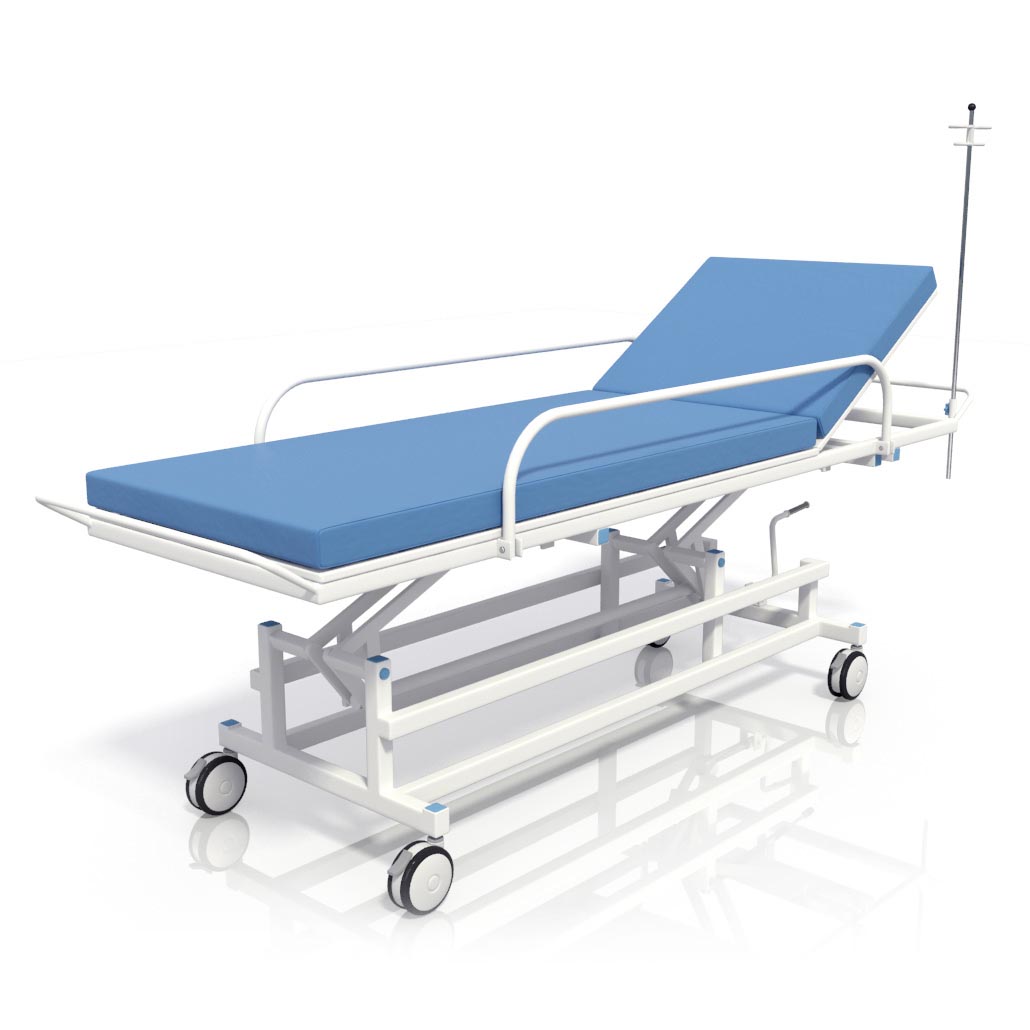




Hospital beds are used for resting patients at home and in medical centers and are a practical tool for caring for patients who are unable to move. Contact our sales experts to purchase products and purchase in cash or installments.
When purchasing a hospital bed, you should pay attention to the following points because the bed has standards that these products must benefit from.
- Patient bed jack or bed lift: If you intend to buy a mechanical home patient bed, you should keep in mind that the bed lift and the ease of movement of the lift are very important for moving the bed, especially for heavy patients. Also, if you intend to buy an electric bed, you should pay attention to the motor power because these jacks are very vulnerable due to pressure.
- Bed guardrail or bad side: Guardrails must be strong enough to withstand the patient rolling over and the patient’s weight falling on the guardrails. The height of the guardrail is also very important because patients usually use wavy mattresses, which increases the possibility of the patient rising higher and, as a result, the possibility of the patient falling increases.
- Bed cover: These covers must be disinfectable and washable, and must also be able to withstand a lot of weight (imagine you are in the hospital and it is visiting time or two people are on the bed to move the patient).
The body or chassis of hospital beds The overall structure of the bed should be such that patients and nurses feel secure about the conditions in which the patient is kept on the bed. - Bed wheels: This part, on which all the weight of the patient and the bed rests, should be such that if excessive pressure is applied, there will be no problem with the bed.
Bed facilities:
Adjustment under the patient’s head for ease of eating, movement and mastery of the patient’s movements and communication with those around them, including the patient’s companions and doctors.
Adjustment under the patient’s feet to prevent being led to the bottom of the bed and to distribute pressure on different parts of the body to prevent bedsores.
Adjustment of the height of the entire cross-section of the bed for maximum patient comfort in order to provide greater and better patient and nurse mobility and comfort.
Strong guards to prevent the patient from falling and falling off the hospital bed, especially for the elderly and those with Alzheimer’s problems.
Braked wheels to keep the bed stable when you move the patient, and the sliding and braking of the wheels are also noteworthy.






Reviews
There are no reviews yet.