






Angiocatheter Injection in Color Code and Different Sizes
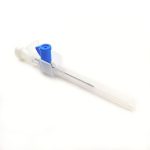
Angiocatheter in color code and different needle sizes is a device used to inject serum, blood and injectable drugs simultaneously or separately intravenously. The unique needle tip, conically shaped angiocatheter, facilitates penetration and entry into the skin. A flexible hollow tube for placement in a body cavity such as a vein to allow fluids to pass or focus their passage.
In medical centers and hospitals, sometimes the patient is unable to receive fluids by mouth, which inevitably requires the use of angiocatheters to deliver fluids to the patient’s body. Due to the presence of Teflon inside the vein, an angiocatheter is usually used for a long time and does not need to be replaced daily. However, to prevent possible infection, the angiocatheter should be replaced every four days at most.
Angiocatheter Specifications
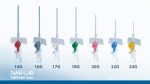
Angiocatheters in different sizes are required to inject intravenous fluids to patients. Angiocatheter sizes are usually identified by their standard colors, and each color has a specific feature and function that makes them suitable for a specific application. Such as orange, gray, green, pink, blue, yellow, purple, which actually determines the size and diameter of the needle of the product from size 14 to 26.
The smaller the size, the thicker the diameter of the needle, so we should know that in cases of injecting medicine or blood into the patient, before using thick angiocatheters such as size 14, the vein on the patient’s skin should be numbed.
Angiocatheter Applications
Venous (IV) access in patients is an important part of medical care. This access gives doctors and nurses the ability to immediately administer and deliver medication to the patient through an angiocatheter. In emergency situations, IV access and proper drug delivery can save the patient’s life. Therefore, in many cases, IV fluid administration should be done as soon as possible.
Since the product is placed directly into the patient’s vein and is related to his blood and health, before use, attention should be paid to the expiration date and its sterility and ensure that it does not lead to infection in the patient. The appropriate angiocatheter should be selected by an experienced doctor or nurse and its size should be selected according to the type and age of the patient.
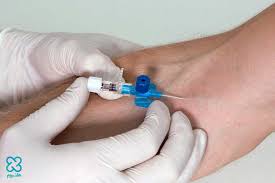
To place an angiocatheter for IV injection or injection, the doctor or nurse uses it, in which a soft plastic tube is inserted into the vein using a needle. Then the needle is removed and the plastic tube remains inside the vein and the access port is glued to the skin.
Unique features of angiocatheter
The use of angiocatheter in different sizes is to provide a solution in IV therapy for a short period. The features of this product are color-coded cover caps and allow for easier identification of the catheter size. In this product, the transparent catheter hub and flashback chamber allow for easy detection of blood when entering the vein. Teflon radiopaque catheter. The carefully finished PET or PU catheter ensures a stable flow and eliminates the twisting of the catheter tip when piercing the vein. Its sharp needle allows you to choose a wider range of angles of entry into the skin and vein. When using the AngioCate, it can be connected to a Luer-lock syringe by removing the filter cap to expose its tapered end. The use of a hydrophobic membrane filter eliminates blood leakage. The close and smooth contact between the catheter tip and the inner needle ensures safe and smooth piercing of the vein.
Possible Complications of Angiocatheter Use
Possible complications of IV cannula or angiocatheter removal may include infiltration, hematoma, air embolism, phlebitis, extravascular relaxation organization, and intravascular injection. Intravascular injection is uncommon, but debilitating.
Infiltration
The infiltration of fluids, as well as administration outside the intravascular space, into delicate tissue. In most cases, it is caused by poor positioning of a needle or angiocatheter outside the lumen of a vessel. Clinically, you will see swelling of the delicate tissue that contains the IV, and the skin will feel cool, stiff, and pale. Small amounts of IV fluid will have little effect, however, certain drugs, even in small amounts, can be exceptionally lethal to the delicate tissue present.
Hematoma
A TA hematoma occurs when blood spills from a vein into the delicate tissue present. This can occur when the IV angiocatheter passes through more than one vascular mass or if there is no weight on the IV site when the catheter is drained. The hematoma can be controlled with direct weight and resolves within 2 weeks.
Air embolism
An air embolism occurs when a large volume of air is introduced into a patient’s vein through an IV set. The IV tube holds about 13 cc of air, and the patient can tolerate up to 1 cc of air per kilogram of body weight in most cases. Young children are at greater risk. Air embolisms are prevented by making sure all air pockets are removed from the IV tube without any effort. Fortunately, this is a relatively uncommon complication.
Intraosseous (IO) Injection
Intraosseous injections are usually used in emergencies where medication or fluids need to be given quickly into the bloodstream and intravenous access is difficult or impossible. Sometimes, when the patient is unwell, the patient’s blood pressure drops and the peripheral blood vessels in the extremities, such as the arms and legs, constrict to encourage blood flow to the most important parts of the body.
In cardiac arrest, they may have no pulse and poor blood flow through normal venous access routes. Rapid access to a vein is almost impossible, so an intraosseous cannula can be an alternative. A small cannula is threaded through the skin into the bone marrow, often in the bony part of the bone just below the knee.
This allows for quick and easy administration of emergency medications and large volumes of resuscitation fluids. Administration into the bone marrow has many advantages over intravenous access in emergencies, as it is non-collapsible and the access point is unlikely to fail. However, the placement of intraosseous access equipment carries a small risk of fracture or infection in deep tissue or bone, so it is usually only used in emergencies.
Choosing the Right Size
Typically, intravenous infusions with angiocatheter are only performed by trained doctors and nurses. They select the injection site by identifying a good vein to insert an IV cannula, often in the inner part of the elbow (antecubital fossa), arm, or hand. For people who have difficulty finding a vein, doctors or nurses sometimes use an ultrasound machine to help find a good vein.
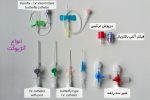
People who need frequent IVs, such as those who need long courses of antibiotics or chemotherapy, can have a longer-term port, and they often go home with these devices. Types of angiectases are based on the color and size of the needle as follows:
Orange angiectase size G14
The orange angiectase size 14 needle is the thickest diameter of the angiectase needle and is used for adults. This angiectase is not suitable for children and the elderly, and its large diameter can tear the skin and cause pain in them. The large size of this angiectase is used for injecting large amounts of fluids or special medications and for blood transfusions to the patient. The outer diameter of this product’s needle is 2.2mm, the inner diameter is 1.7mm, and the needle is 50mm long.
Gray Angiocatheter Size G16
The gray or gray angiocatheter with a needle size of 16 is also considered a thick-needle angiocatheter. This type of needle is also used for adults and is used to inject fluids or special drugs in large quantities and to transfuse blood to the patient. The outer diameter of the needle of this product is 1.7mm and the inner diameter is 1.3mm, and the needle length is 50mm.
Green Angiocatheter Size G18
The green angiocatheter with a needle size of 18 has a thinner needle than the orange and gray types, but its needle is thick for children. This angiocatheter is also used for adults and mature people. The green angiocatheter is a consumable item in the operating room and is used to transfer medicine and sometimes to transfuse blood to patients who have undergone surgery. The outer diameter of the needle of this product is 1.3mm and the inner diameter is 1mm, and the needle length is 33mm to 45mm.
Pink Angioket Size G20
Pink Angioket with size 20 is a widely used size compared to orange, gray and green and is used for adolescents and adults and people with thin, small and fragile veins. This size of Angioket is used in emergencies in medical centers for serum therapy and hospital drug injections and is excellent for intravenous injections and blood transfusions. The outer diameter of this product’s needle is 1.1mm and the inner diameter is 0.8mm and the needle length is 33mm.
Blue Angioket Size G22
Blue Angioket with size 20 is also very widely used and is more suitable for adult children, adolescents and elderly people who cannot tolerate the pain of injections. The use of blue Angiokets is not used for blood transfusions, but they are excellent for medium-flow intravenous injections. Outer diameter of the needle
This product is 0.9mm and has an internal diameter of 0.6mm and a needle length of 22mm to 25mm.
Yellow Angiocate size G24
Yellow Angiocate with size 24 is most commonly used for newborns. This Angiocate is sometimes used for adult patients as well. Because the yellow Angiocate allows a small flow of fluid through it, it is used to manage the transfer of drugs and fluids such as serum to newborn patients and this size of Angiocate is not used for direct injection of drugs. The external needle diameter of this product is 0.7mm and the internal diameter is 0.4mm and the needle length is 19mm.
Purple Angiocate size G26
Purple Angiocate needle size 26 is the thinnest and smallest diameter of Angiocate needle and is used for newborns or those who need venipuncture and drug injection. This Angiocate is used in the pediatric and neonatal departments and for injections of 1000Mil in 26 minutes.
Important points for using angiocatheter
- The angiocatheter should only be attached to the patient’s skin by trained individuals or medical staff.
- Before attaching to the skin, disinfect the area with an alcohol pad and wear gloves.
- After inserting the angiocatheter into the vein, if the area becomes swollen or red, it is a sign of improper attachment of the angiocatheter.
A site away from joints should be selected for attachment to the vein, and the angiocatheter should be replaced after a maximum of two to four days.
- If part of the angiocatheter comes out of the skin, do not reinsert the needle, as this can cause embolism.
- Use angiocatheter of the appropriate and small size depending on the needs of patients such as children and the elderly.
- Angiocatheter should be purchased from reputable companies, stores, and medical centers, and pay attention to its expiration date and intact packaging.
How to use angiocatheter
- To attach the angiocatheter to the vein, place a tourniquet (blood collection tourniquet) on the patient’s lower limb.
- Prepare the patient’s skin around the vein by wiping the intended insertion site with alcohol or a suitable cleaning solution.
- Safely remove the purchased angiocate from its intact, sterile package.
- Secure the patient’s vein area while the physician holds the patient’s arm or wrist. This step may require more than one person for children.
- The catheter is rotated to unlock the sheath at the needle end.
- With the other hand, the physician or nurse locates the vein and inserts the needle into the vein.
- When blood appears, the physician attempts to advance the catheter into the vein.
- In the final step, the injector secures the needle with angiocate adhesive and connects the fluids to the angiocate.
Features of Angioket
- Used for injecting food or pharmaceutical serums into humans and animals
- Suitable for injecting and quickly transferring medicine into the patient’s vein
- Can be used if a blood transfusion is needed to the patient
- Suitable for injecting anesthetic drugs in surgical procedures
- Repeatedly injecting medicine into the patient without the need for multiple needle insertions
- Reducing the psychological impact and pain of repeated drug injections into the patient
- Available in all sizes in reputable global brands





Reviews
There are no reviews yet.