





Band-Aid
The skin has a delicate and sensitive structure, and during everyday activities, any kind of scratches, cuts, and damage may occur to it. So it seems that life without Band-Aid, this small and useful bandage, would definitely be lacking! The first Band-Aid was also created based on this human need for skin care. Josephine Dixon and her husband Earl Dixon invented a kind of wound protector by placing pieces of tape and cotton gauze to get rid of the wounds that were caused by Josephine’s lack of cooking skills. Gradually, Earl prepared several ready-made bandages by placing square pieces of cotton yarn at equal intervals on the tape and covering them with Caroline. After a while, he talked to his boss about this new invention, and soon the first adhesive bandages were produced and sold in the world under the famous BAND-AID brand. But today, superficial wounds are also caused by carelessness and working with sharp objects, and Band-Aid is the first easy and practical solution that comes to everyone’s mind.
What types of wounds can a bandage be used for?
A bandage cannot be used for all wounds and skin injuries. To learn about its use, you should refer to the types of scratches and cuts on the skin. When the natural consistency and continuity of the skin is lost due to contact with sharp objects, etc., a wound is created and a solution is needed to restore this continuity. The surface layer of the skin is the epidermis, the inner layer is the dermis, and the last layer is fat. If skin scratches occur in the epidermis, bleeding does not occur and if the skin is cared for and does not come into contact with allergens and pollution, it will heal. However, if the dermis layer of the skin is damaged and bleeding occurs, if the scratch is not deep, we can use a bandage to bring the edges of the skin together and provide the conditions for re-grafting. However, in the case of deeper wounds, if a bandage is used, a scar will remain after the skin graft and the edges must be brought together with stitches. So, in the case of superficial wounds of the dermis, a bandage can be used as a type of suture for the skin. But in both types of wounds, it is very important to keep the wound, the adhesive, and any covering layer clean and sterile.
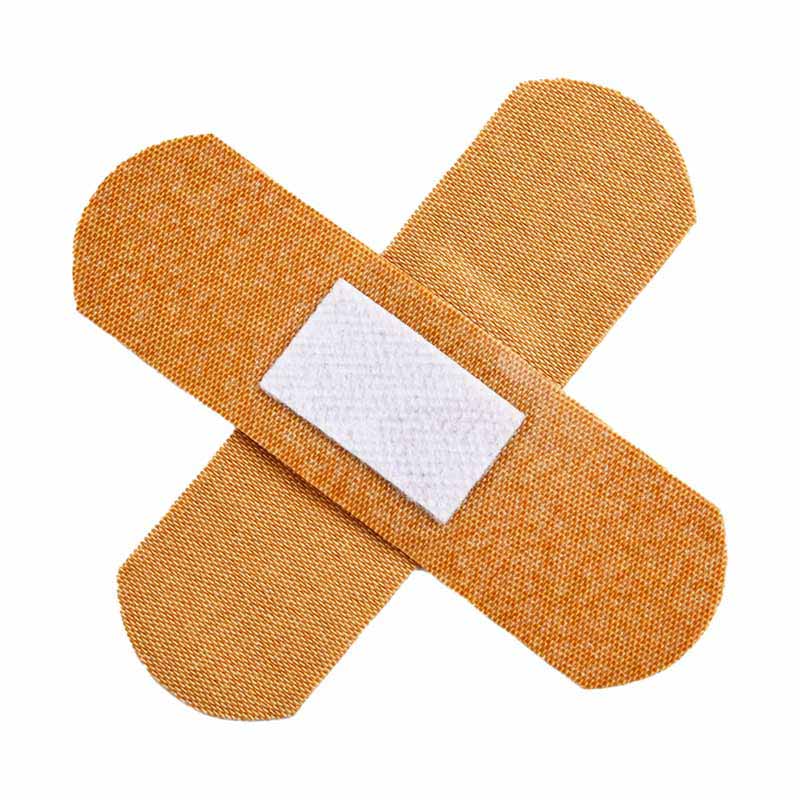
White bandage inside the adhesive bandage
The important point in using the adhesive bandage is that the white bandage inside it is completely placed on the wound and its adhesive layer does not stick to the wound in any way. This white bandage contains standard amounts of zinc and also absorbs moisture from the wound. Therefore, it helps the wound to heal and heal faster.
Types of adhesive bandages and important points about using them
The first point in using the adhesive is to use sterile and standard types. Also, if you have sensitive skin, it is better to ask the seller to give you an anti-allergic adhesive bandage. In the manufacture of these types of adhesives, no allergenic substances or fragrances that irritate the skin are used. Herbal adhesives have also been produced, in which herbal materials such as aloe vera are used to heal the wound faster and increase the durability of the adhesive.
Cloth Bandages
The protective and outer layer of the bandages is usually made of cloth, which, in addition to absorbing moisture from the skin and helping the wound heal faster, also helps the skin exchange air and dry out in a timely manner. However, note that cloth bandages quickly get wet when exposed to water or moisture, which can attract dirt and infection to the wound. Therefore, if you are sure that your skin will not come into contact with any moisture for a few hours, use cloth bandages so that the wound can breathe and heal faster.
Nylon Bandages
Nylon bandages do not get wet when exposed to water and have a longer lifespan, but they do not help the skin breathe. If you are going to be in contact with water or environmental pollutants during the day, it is better to temporarily use nylon bandages.
Bandages made of two layers of cloth and nylon, in addition to helping the skin stay dry and absorb moisture, do not get wet when exposed to moisture and prevent the skin from absorbing dirt and infection. Today, various types of adhesive bandages are produced in different shapes and colors, and even adhesive bandages specifically for children. In addition to their wound healing properties and protection from contamination and moisture, they also create a good feeling in injured people and children with their beautiful appearance.


Reviews
There are no reviews yet.