







Nelaton Catheter
Catheters are generally thin, completely sterile tubes that are inserted into the urinary tract and bladder and facilitate the process of urine evacuation. In terms of application, catheters are divided into two groups:
A. Permanent catheter: This category of catheters is intended for patients who are unable to move for any reason or who suffer from incontinence, and the period of time for which the catheter is used in these patients can vary from a few hours to several months. The most common permanent catheters are two-lumen and three-lumen Foley catheters.
B. Temporary catheter: In cases where there is a need to empty the bladder only once and the catheter is removed and discarded immediately after emptying the bladder, a temporary catheter is used. Temporary catheters are also used to dilate the duct in people with duct stenosis. The most common temporary catheters are Nelaton catheters. These catheters are simpler and cheaper than Foley catheters and do not have a balloon at the tip of the catheter. These catheters are made of polyvinyl chloride or polyurethane.
Catheters also differ in two important aspects, first, the type and location of the catheter and second, the length of time the catheter remains in place. Catheters have various types, including the following:
1. Simple or Nelaton or disposable catheter
2. Foley catheter (foley) with two or three branches
3. Peters catheter
4. Metal catheter
5. Ureter
6. Benike catheter
Introduction to Nelaton catheter
As you know, doctors’ tools are medical equipment that they use to assess the patient’s condition in order to diagnose the type of disease and then control and treat it. For this reason, due to the importance of these tools, research and study have increased to develop these equipment. Today, medical equipment has a wide range, and each department, including diagnosis, control, and treatment of diseases, has special tools. In this section, we want to provide you with information about one of the most widely used tools, the Nelaton catheter.
The Nelaton catheter or Nelaton catheter is produced in sterile packages. This catheter does not have a balloon, is softer and more flexible than other catheters, and does not have a urine drainage bag; this type of catheter is generally used for urine sampling. To perform this procedure, the Nelaton catheter is connected to the urethra so that it enters the bladder and collects urine through it. It is worth noting that in addition to urine sampling, the Nelaton catheter has other uses, including introducing medication into the bladder, draining nasal secretions, lungs, and also draining nasal secretions of patients who are in the ICU or CCU and are unable to drain their secretions themselves.
The Nelaton catheter is one of the uncoated catheters and is lubricated manually before use. Individual sterilized gels can be used for this purpose. The Nelaton catheter is usually produced in the form of travel pocket packages and its shape is curved or U-shaped and is easy to carry.
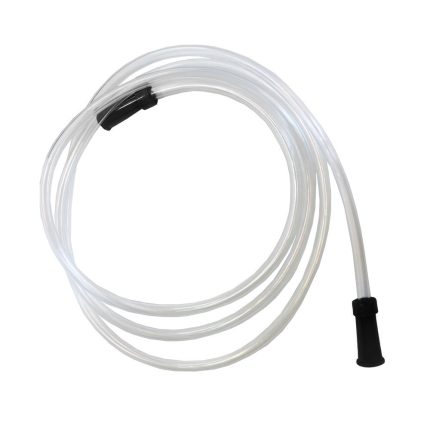
The Nelaton catheter tube is punched at the end in a way that prevents traumatization of the ducts and bladder, and the outlet and colored end of the catheter is designed to be easily connected to the urine bag connector. This catheter is available in various diameters from 2 to 6 mm, which is equivalent to 8 to 18 French sizes.
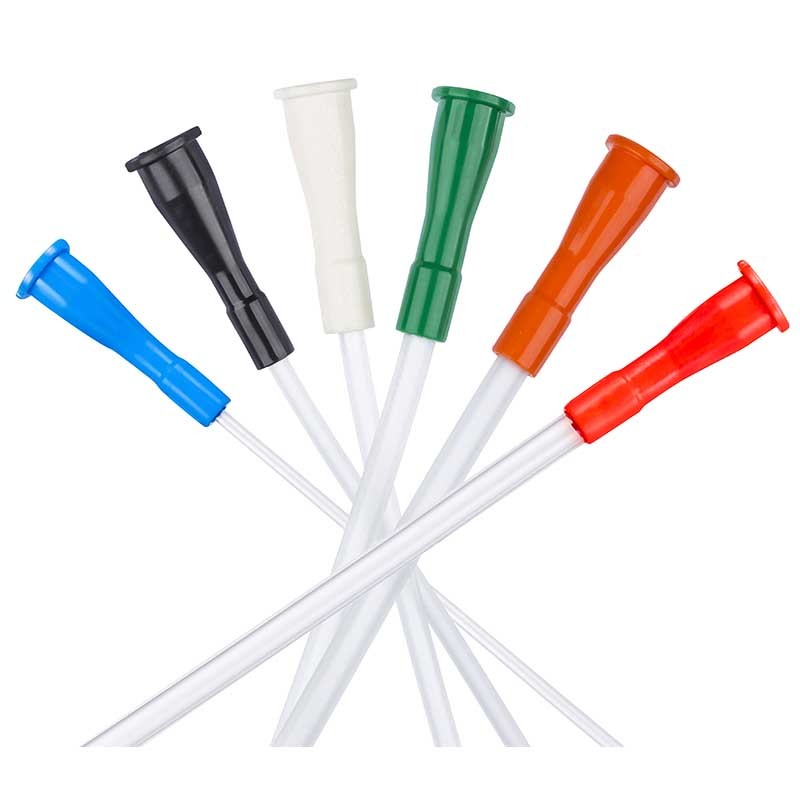
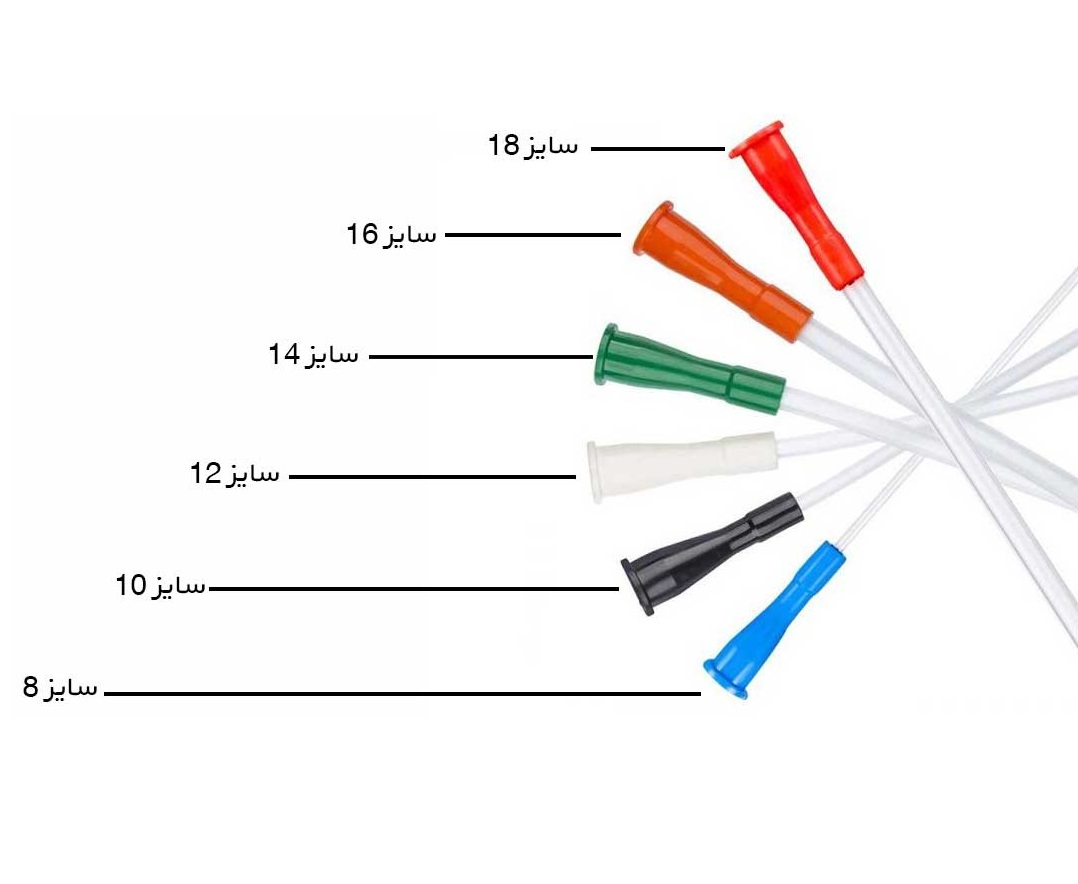
These catheters are used according to the patient’s gender, age and size, for this reason, larger catheters are used for men and smaller ones for women. Higher numbers (40 cm long) are larger and are used in men, and smaller numbers (11 cm long) are used in women. Nelaton catheters can be divided into several categories according to their size, each of which is marked with a separate color for ease of identification. Also, each of these catheters has its own specific use and efficiency, which the doctor determines according to the patient’s condition.
Nelaton Catheter Sizing
Nelaton catheters have specific sizing as follows:
1. Blue Nelaton catheter or catheter number 8
2. Black Nelaton catheter or catheter number 10
3. White Nelaton catheter or catheter number 12
4. Green Nelaton catheter or catheter number 14
5. Orange Nelaton catheter or catheter number 16
6. Red Nelaton catheter or catheter number 18
One of the sterile, single-use catheters that has been produced for temporary catheterization of urine from the bladder or pulmonary suction is the Nelaton catheter. Depending on the size of the patient’s breathing tube, different sizes of catheters are used for suctioning. Generally, this catheter can be used to drain urine in patients with urinary tract obstruction, because this catheter easily passes the obstruction and enters the bladder. The plastic tube of this product, which is made of natural latex and silicone, is very flexible. Its high flexibility means that it does not cause pain to the patient when entering the urethra and bladder. It is essential to use sterile gloves when inserting the Nelaton catheter, and if the catheter becomes contaminated, it should not be used under any circumstances.
The Nelaton catheter is produced in two models for women and men with different diameters, with the male model being longer than the female model. When purchasing the introduced catheter, one should be careful to purchase a product that is of high quality because poor-quality catheters, due to non-compliance with sterile conditions, cause the patient to suffer from infectious diseases, etc. in addition to the problem of urination, and due to their poor quality, they may cause pain, itching, burning, and swelling of the urethra, thus adding to the patient’s problems. Therefore, the catheter should be purchased from a reputable brand. The Nelaton catheter is also used to monitor urine output in a sick or injured person or to collect a sterile urine sample for diagnostic purposes.
The Nelaton catheter is a simple catheter that is very easy to insert and does not require special skills and can be learned with only simple training. When the Nelaton catheter is no longer needed, sterile gloves should be worn and the patient should be gently pulled out and thrown into the trash. The person using the catheter should drink plenty of fluids to prevent urinary tract infections. The urine bag attached to the catheter tube should be emptied every 8 hours before it is completely full, and washed with water and vinegar or bleach each time. After removing the Nelaton catheter from the patient’s body, the person should wash the genital area well and dry it carefully. It should be noted that the green Nelaton catheter No. 14 is one of the most commonly used Nelaton catheters.
Warnings for using Nelaton catheter
This product can only be used once. If the catheter accidentally becomes contaminated, throw it away and use a new sterile catheter.
Using a catheter may cause urinary tract infections. For this reason, all parts and their installation site should always be disinfected.
Excessive use may have side effects such as skin allergies, bladder stones, urinary tract scarring, and kidney failure.
Applications of the Nelaton catheter
Intermittent catheterization and direct urine sampling from the bladder
Urodynamics and other examinations
Suprapeutic catheterization without a balloon
Treatment of ductal strictures
Introducing medication into the bladder
Smooth conical tip to facilitate placement in the bladder
Features of the Nelaton catheter
Smooth conical tip to facilitate placement in the bladder
Has 2 holes for urine drainage
Made of natural latex
Disposable
Flexible
Fully sterilized
Made of polyvinyl chloride or polyurethane



Reviews
There are no reviews yet.