• انگلیسی
    • آلمانی
    • فرانسوی
    • به پلاگین WPML نیاز دارد
  • کشور
    • ایالات متحده آمریکا
    • آلمان (EUR)
    • ژاپن (JPY)
هر متن دلخواهی را میتوانید در این قسمت اضافه کنید...
  • خبرنامه
  • تماس با ما
  • سوالات متداول
Login / Register
0 Wishlist
0 items تومان 0
  • English English
    • فارسی فارسی
Menu
Login / Register
Sign inCreate an Account

Lost your password?

0 items تومان 0
دسته بندی محصولات
  • Shop
  • weblog
  • contact us
  • About us
Click to enlarge
Home products Foley catheter
Urine bag
Back to products
Nelaton Catheter

Foley catheter

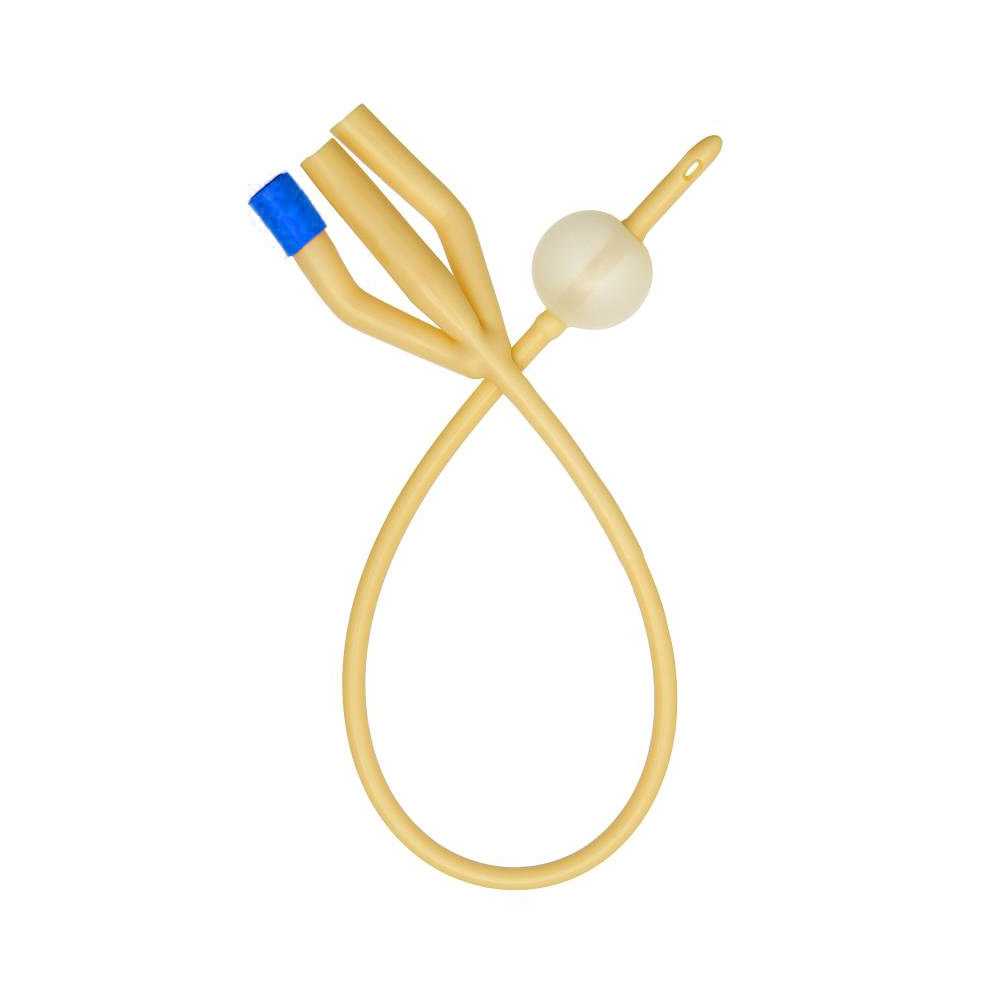
A Foley catheter is a thin, sterile tube that is inserted into the bladder to maintain the flow of urine. It is also called an indwelling catheter because it can be left in the bladder for a period of time. At the end of the Foley catheter is a balloon that is filled with sterile water to prevent the Foley catheter from coming out of the bladder. Urine is drained through the catheter tube into a urinary bag.

Compare
Add to wishlist
SKU: 13268 Categories: Catheter, Foley catheter, Medical equipment - consumables, products
Share:
  • Description
  • Reviews (0)
Description

Foley Catheters (Double or Triple)

One of the most common urinary catheters is the Foley Catheter. A Foley Catheter is a thin tube that passes through your urethra and bladder. The end of the catheter has a water-filled balloon so it can be placed in your bladder. At the other end, outside your body, is a drainage bag to collect urine. The nurse will insert the Foley catheter through your urethra. There are two things to keep in mind when inserting the catheter:

For men using a Foley catheter: Start at the tip of the penis, where the catheter goes in, and clean all the way to the anus. This will help prevent germs from spreading into your urethra.

For women using a Foley catheter: Start where the catheter goes in, making sure to separate the labia, and work your way back toward the anus.
These catheters are bag-like and are inserted into the bladder from their end. When the doctor wants to use the catheter for a long time, he uses this model, because these catheters do not slip and do not come out of the bladder due to the presence of a balloon at the beginning of their duct. For this reason, these catheters are also called indwelling catheters.

At the end of Foley catheters, a balloon is placed, which contains sterile water, and prevents this type of catheter from coming out of the bladder. In patients who, according to the doctor’s diagnosis, need to keep the Foley catheter in place for a while, the following points are recommended:

Drink plenty of fluids to prevent infection. (If you do not have a fluid restriction from your doctor)
To prevent contamination, avoid separating the urine tube from the urine bag.
If your catheter comes out or leaks urine, do not do anything yourself and be sure to visit a medical center to replace it.
To reduce the risk of infection, empty the urine bag every 8 hours.
If urine does not flow into the bag within 6 to 8 hours and you are sure that your catheter is not twisted or bent, visit a medical center.
To prevent urine reflux and the possibility of infection, keep the urine bag below the level of your bladder. Never place the urine bag on your stomach.
Avoid pulling or removing the urine drainage tube, as this can cause bleeding or injury to the duct. Leave this task to trained personnel.
This type of catheter, which is considered a permanent catheter, is permanently inserted into the person’s bladder and is suitable for short-term and long-term use. A nurse usually inserts the catheter into the urethra, but sometimes it can be inserted through a small hole in the lower abdomen, at the beginning of the urethra. This type of catheter is known as an indwelling catheter. A hydrophilic coating is placed on top of the Foley catheter to reduce friction between the catheter surface and the urethra during insertion for patient comfort.

Foley Catheter Sizing

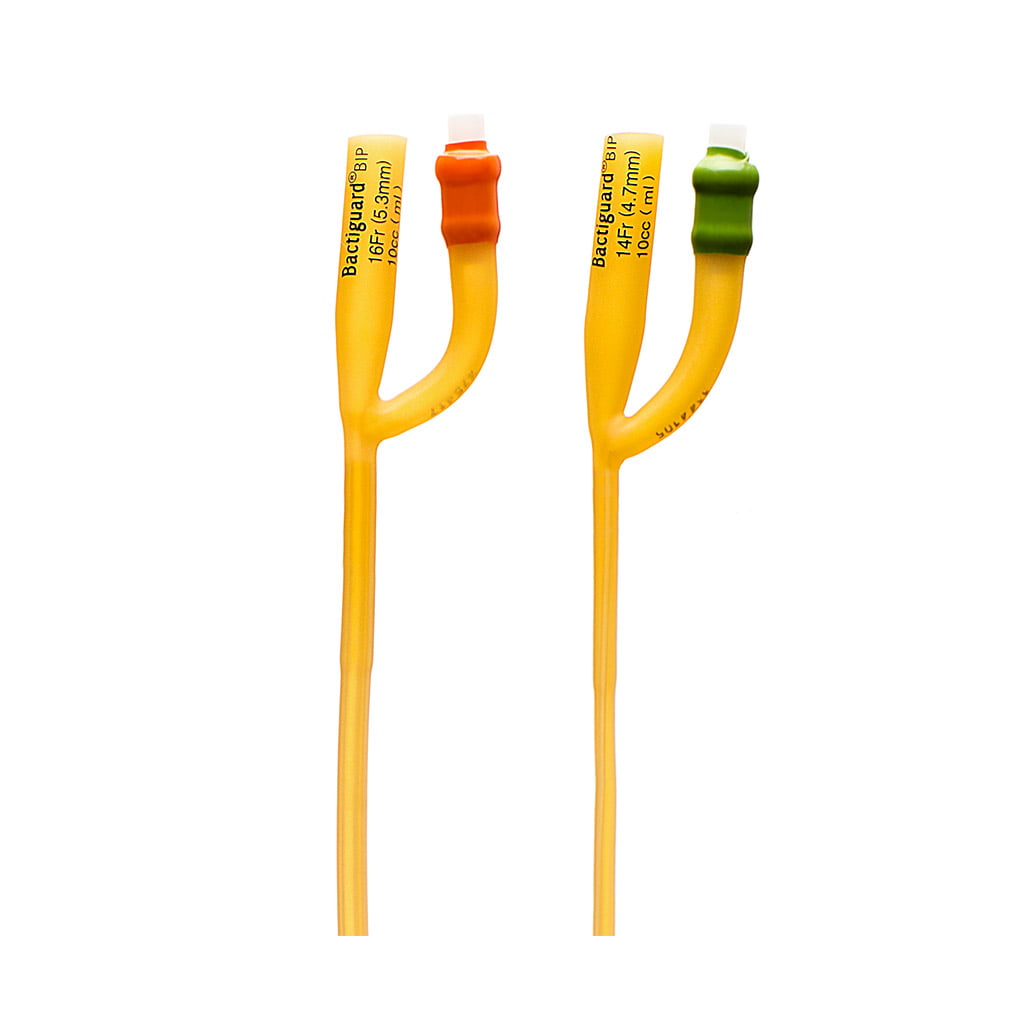
The most common use of catheters is in urology, internal medicine, surgery, gynecology, gynecology, and pediatrics, for urine drainage, sampling, and more. Regarding catheter sizes, they are described in French units (circumference in millimeters). Thus, in patients with urethral strictures or a history of strictures or scarring, smaller catheters (12-14 French) are used, and in patients with enlarged prostates, larger catheters (20-26 French) are used to prevent kinking of the catheter as it passes through the prostatic urethra. 14-16 French catheters are often appropriate for adult women. For most men, a 16- or 18-French catheter is appropriate. This sizing is as follows:

Orange – Size 6 –‎‎- Size 2.0 mm

Red – Size 8 –‎‎- Size 2.7 mm

Yellow – Size 10 –‎‎- Size 2.7 mm

White – Size 12 –‎‎- Size 2.7 mm

Green – Size 14 –‎‎- Size 2.7 mm

Orange – Size 16 –‎‎- Size 2.7 mm

Red – Size 18 –‎‎- Size 2.7 mm

Yellow – Size 20 –‎‎- Size 2.7 mm

Purple – Size 22 –‎‎- Size 2.7 mm

Blue – Size 24 –‎‎- Size 2.7 mm

Black – Size 26 –‎‎- Size 2.7 mm

Do you know how to remove catheters at home?

If you are planning to remove a catheter from your body, you should know that removing the catheter will be much easier than inserting it. If Foley catheters are used, to remove it, you must first empty the water inside the balloon inside the bladder and then slowly remove the catheter tube from your body. Before removing the catheter tube, it is better to rotate the tube 360 ​​degrees left and right several times to remove the slight adhesion that has developed with the urinary tract during its use, and then pull the catheter out.

In what cases is a Foley catheter used?

Foley catheters are used for many disorders, procedures, or problems, such as:

Urinary retention resulting in urinary hesitation, straining to urinate, decreased size and force of urine stream, interrupted urine flow, and a feeling of incomplete emptying

Blockage of the urethra by an anatomical condition that makes urination difficult: prostatic hypertrophy, prostate cancer, or urethral stricture

Monitoring urine output in a sick or injured person

Collecting a sterile urine sample for diagnostic purposes

Bladder dysfunction, such as after spinal cord trauma (a catheter can be used regularly to assist urination).

Reviews (0)

Reviews

There are no reviews yet.

Be the first to review “Foley catheter” Cancel reply

Your email address will not be published. Required fields are marked *

Related products

Compare

Band-Aid

Band-Aid, Glue, Medical equipment - consumables, products
Band-Aids are designed to cover superficial wounds. They prevent moisture from entering the wound. You can get band-Aids in fancy designs for children and simple designs.
Add to wishlist
Read more
Quick view
Compare

Chromic suture thread

Chromic suture thread, Operating room equipment, products, suture thread
Chromic suture thread is a medical equipment used in surgery and sutures. This thread can be absorbed.
Add to wishlist
Read more
Quick view
Compare

Iranian Plaster Bandages

Medical equipment, Plaster bandage, products
Rated 5.00 out of 5
Iranian plaster bandages in different sizes are used for plastering and immobilizing body parts after fractures. For plastering or splinting, an orthopedic plaster bandage, which is usually a regular plaster bandage or fiberglass, is used. After getting wet, these bandages are bandaged around the broken limb and harden, immobilizing and protecting it. A roll of cotton soaked in plaster can also be used to make plaster masks. It hardens very quickly and can be painted when dry.
Add to wishlist
Read more
Quick view
Compare

Scalp Vienna

Medical equipment, products, Scalp Vienna
Rated 5.00 out of 5
Scalp Vein or Butterfly Needle is a device from the family of medical-injection devices that is used for intravenous injection of serum, blood and injectable drugs. Its main use is in children and as an agent to keep the vein open. This device is used for venous blood collection from the elderly, children, infants and people with thin or hard veins. Scalp Vein is one of the most widely used medical consumables in hospitals and medical centers due to its multiple applications and high performance. Scalp Vein, also known as winged injection sets, is used both for intravenous injection of fluids or drugs and for blood collection.
Add to wishlist
Read more
Quick view
Compare

Serum set or intravenous infusion set

Medical equipment - consumables, products, Serum set
Rated 5.00 out of 5
An IV set is a very important connector that connects the IV source or container to a vein. This type of medical equipment is sterilized with ethylene oxide gas and is connected to the vein via an angiocatheter or scalpel to allow fluids and injectable medications to enter the blood.
Add to wishlist
Read more
Quick view
Compare

Splint

Medical equipment, products, Splint
Rated 5.00 out of 5

Splint is a device in which the limb is placed to protect it and immobilize one or more joints.

Add to wishlist
Read more
Quick view
Compare

Sterile gauze

Medical equipment - consumables, products, Sterile gas
Sterile gauze is a thin, net-like fabric that is used in the operating room as well as in non-hospital settings. Sometimes superficial and even relatively deep scratches occur on the body that can be treated without the need to go to the hospital. In such situations, maintaining the hygiene of the wound area is essential to prevent infection. This gauze is made of 100 percent pure cotton. Its lint-free production means that it does not stick to the wound.
Add to wishlist
Read more
Quick view
Compare

Wicker glue

Glue, Medical equipment - consumables, products, Wicker glue

Efficient mat adhesive in wide and narrow sizes is usually used for dressing and post-operative care of wounds. Therefore, this type of adhesive is produced with special features. Mat adhesives are produced from polyurethane and synthetic polyester materials that are lint-free and hypoallergenic. This type of adhesive is a thin and flexible layer like fabric, which despite being lint-free, has many small pores. These open pores are made to allow air, moisture, and steam to pass through the adhesive layer, thus preventing skin sensitivity and leaving no scars, and keeping the skin in the wound area dry and clean at all times.

Add to wishlist
Read more
Quick view

    If you have any questions or problems with your purchase, please contact us.

    • Tehran, East Urmia, Jomhuri Square, No. 5, Mokhtari Alley, Unit 3
    • تلفن: 09165062138
    تمام حقوق این وب سایت برای شرکت تجهیزات پزشکی مدیلوکس محفوظ می باشد. (طراحی شده توسط وِرتاوب)
    payments
    • Menu
    • Categories
    • سیاست حفظ حریم خصوصی
    • بازگشت وجه
    • شرایط و ضوابط
    • آخرین مطالب
    • تماس با ما
    • Shop
    • weblog
    • contact us
    • About us
    • Wishlist
    • Compare
    • Login / Register
    Shopping cart
    Close
    • English
    • فارسی (Persian)