


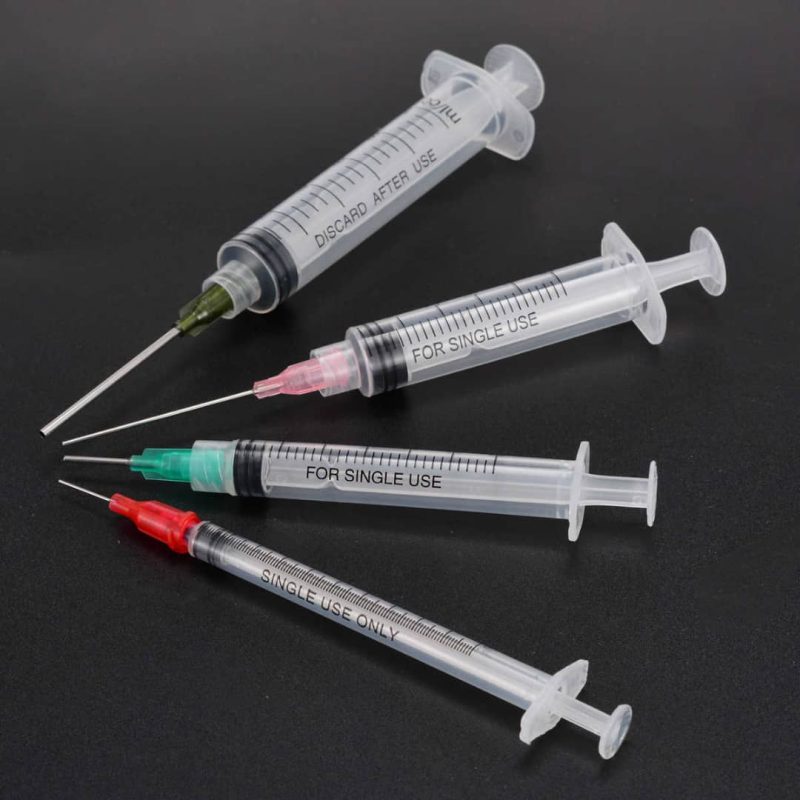
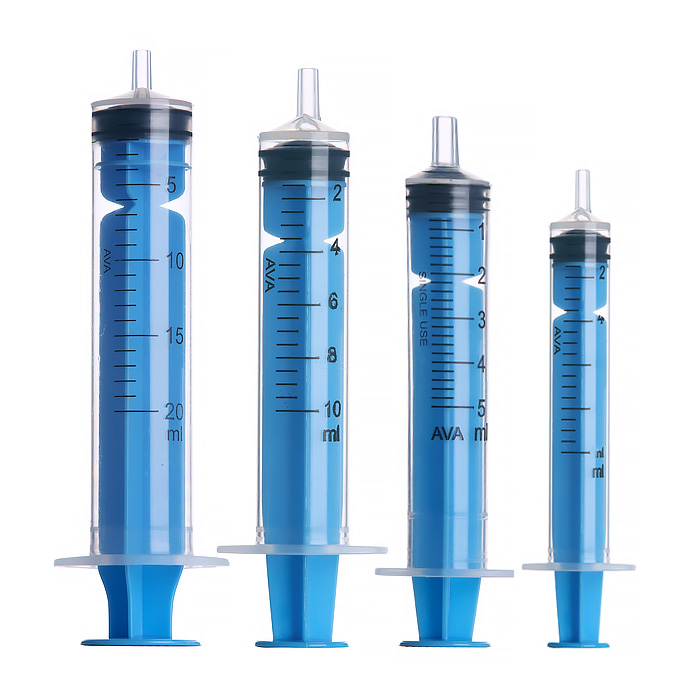
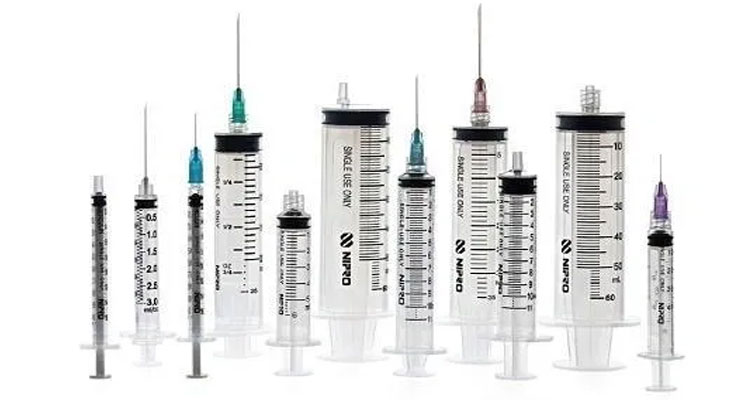
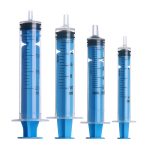
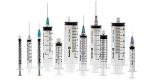


A syringe is a medical device used to inject medication into the body. A syringe is generally a cylindrical, graduated device with a plunger at the end that, when pushed by hand, directs the medication forward and enters the body tissue through a sharp needle.
Different types of syringe sizes:
Syringes are labeled based on the amount of liquid they can hold and are divided into small, medium, and large sizes.
Syringe capacity measurements:
Milliliters (ml) for liquid volume
Cubic centimeters (cc) for solid volume (1 cc = 1 ml)
Different types of needle sizes:
Apart from knowing the different types of needles, you should also know the different labels to better identify them. On average, the label will say “22 G 1/2” where 22 G indicates the gauge of the needle, while 1/2 indicates the length of half an inch.
Remember, the higher the gauge, the thinner the needle. Also, some medications are absorbed superficially, directly under the skin. In other cases, you inject the medication deep into the muscle. The length of the needle will vary accordingly.
Subcutaneous Injection:
There is also a subcutaneous injection, which is injected into the fatty tissue just under the skin. In this case, the needle should be small and short, 25 to 30 gauge, and about half to five-eighths of an inch long.
Intramuscular Injections:
Doctors give these injections into the muscle. This requires a thicker and longer needle, 20 to 22 gauge. These needles are about an inch or an inch and a half long.
The patient’s body fat density also makes a difference, as the amount of needle that must be removed from the skin to reach the muscle.
Syringe A medical device used to inject fluids into or remove fluids from the body.
This device consists of a needle attached to a hollow cylinder fitted with a sliding piston.
The downward movement of the piston injects the liquid.
The upward movement expels the liquid. Medical syringes were once made of metal or glass and required cleaning and sterilization before reuse.
Most syringes used in medicine are now plastic and disposable.
Types of syringes
- Simple syringe
- Tuberculin
- Luer lock
- Gavage
- Insulin
- Double needle
- Hypodermal
When injecting, pay attention to the gauge of the needle head:
- 26 to 28 gauge for intradermal injection
- 19 to 27 gauge for subcutaneous injection
- 26 to 30 gauge for intramuscular injection
- 26 and 27 gauge for all three types of injection




زهره آغری –
گیج سرنگ ها بسیار با کیفیت هستند و تیوپ داخل سرنگ محکم نیست