




What is suture adhesive? How to use suture adhesive and its types
We have certainly all experienced cuts and scrapes on the surface of the skin and different parts of our bodies. Wounds and scrapes that do not require a doctor’s visit and deep stitches, but at the same time, they cannot be left alone; these wounds must be completely covered and the way for contamination and bacteria to enter them must be closed.
In general, it should be said that there are different ways to close such wounds, the best and fastest of which is suture adhesive. This adhesive has different types, and each of them is used for specific cases and different parts of the body.
In this article, we try to introduce this adhesive, learn about its different types, and also examine its use and benefits.
As mentioned in the previous section, most people experience severe or minor injuries on parts of their bodies throughout their lives. Some of these injuries are such that they cannot be fixed or treated with a simple wash and bandage, and to prevent any germs and contamination from entering the wound, these injuries must be closed or sewn in some way.
Suture is actually a term used to close or sew wounds and cuts. Basically, the type of suture is determined according to the depth of the wound and injury, as well as the damaged organ.
What is suture adhesive? How to use it
As mentioned in the previous section, there are wounds and injuries whose depth and dimensions are less than 3 centimeters and practically do not require stitching or deep stitches. In such cases, suture adhesive can be a very suitable option. The treating physician can easily use this type of adhesive to close and prevent contamination from entering the wound and be almost certain that the patient’s injury will heal after 5 to 10 days.
Different types and their uses
There are different types of this adhesive. However, all its models have the same function. In this section, we will introduce its different types and examine their uses.
Kitopur Suture Adhesive
Kitopur is a suture adhesive that is used as a protective layer on wounds that have deep sutures or wounds that have surgical dressings. This type of adhesive is suitable for most wounds.
Kitofix Suture Adhesive
Kitofix, also known as mat suture adhesive, is hypoallergenic and is very suitable for fixing wound dressings for people with allergies.
Kitotrans Pad Suture Adhesive
The adhesive used in this type has a transparent appearance and is waterproof, allowing the patient to wash or bathe the desired area while using it.
Kitotrans Suture Adhesive
This model is also transparent and waterproof, which is used in many cases. The adhesive used in Kitotrans adhesive is also hypoallergenic and is very suitable for sensitive people.
Kito Strip Suture Adhesive
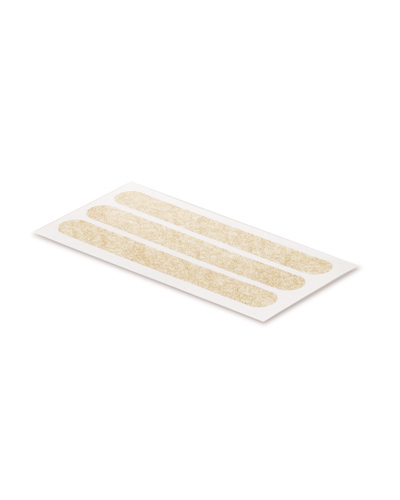
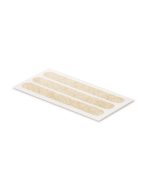
Kito Strip has a strip-shaped appearance and its adhesive is also hypoallergenic. This type of suture adhesive is also very soft and flexible, which makes it easier for the patient to use.
Kitoshan Suture Adhesive
This adhesive, which is made of polyurethane, is often used in surgical treatments. Kitoshan suture adhesive is used for long-term treatment of patients due to its very high adhesion properties. Also, the patient’s skin can breathe easily and not become wet or contaminated when using this type of suture adhesive.
How to use suture adhesive correctly
Although using suture adhesive is much easier than other types of suturing or covering wounds, knowing how to use it correctly can lead to ease of use and better results.
In this section, we will explain the steps for using suture adhesive step by step:
First, you should wash your hands thoroughly with soap and water.
If the wound is not too open and not bleeding, the wound should also be washed carefully with soap and water.
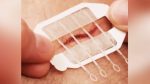
Then, the adhesive should be opened and kept ready.
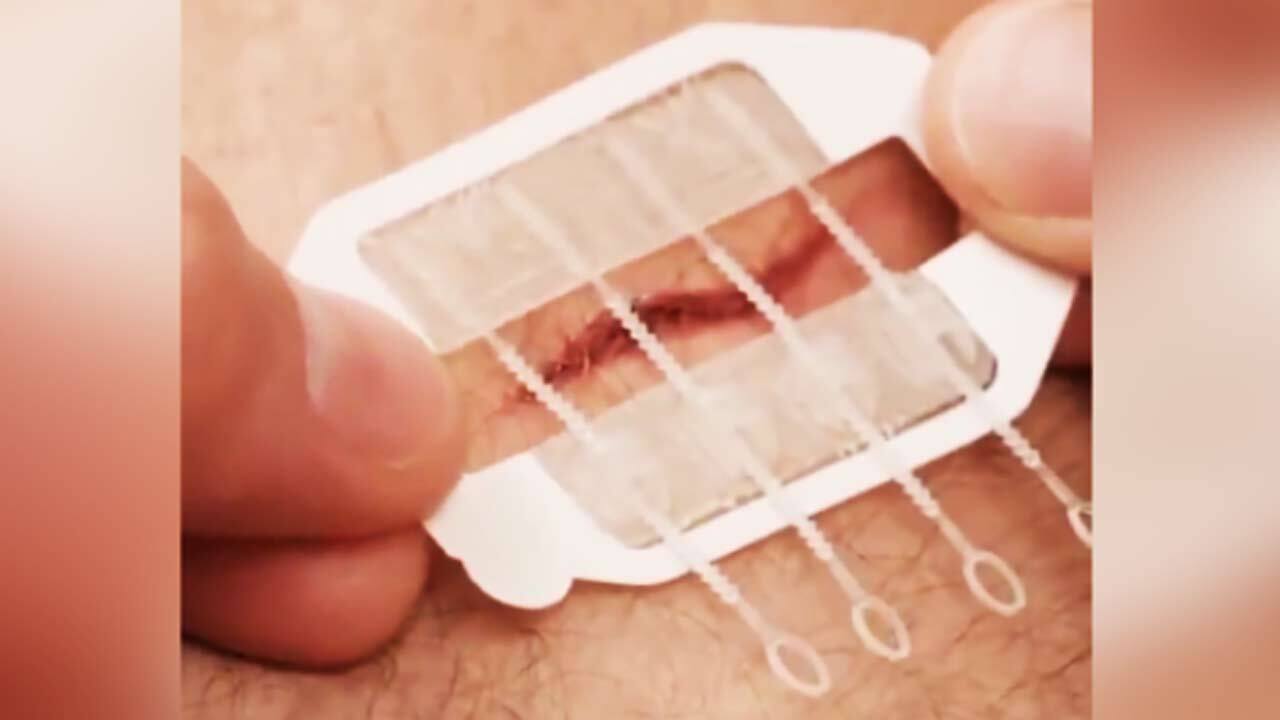
Now, if possible, the two sides of the wound should be pulled and brought as close to each other as possible.
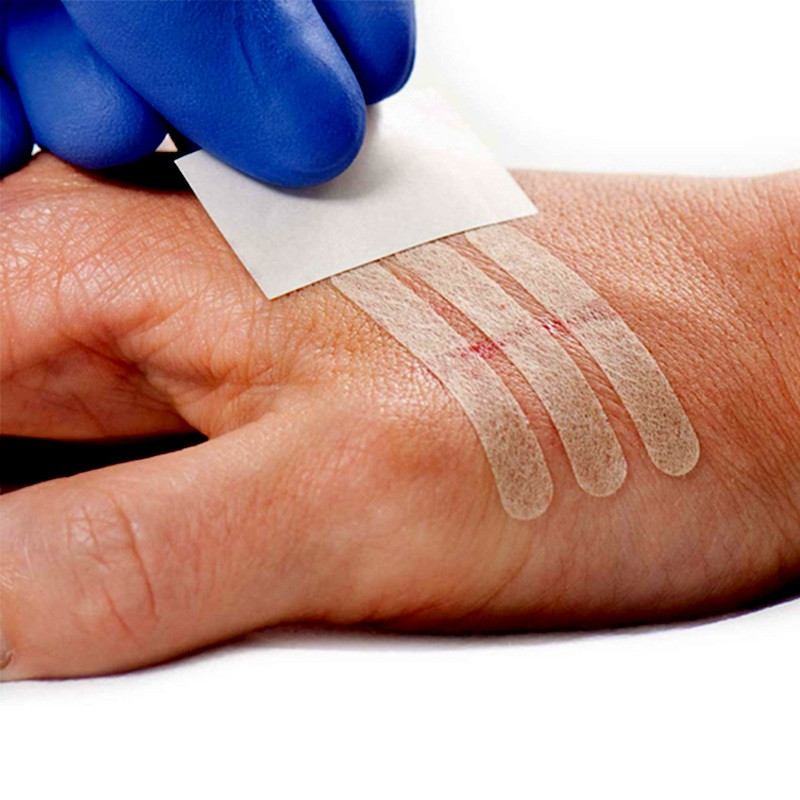
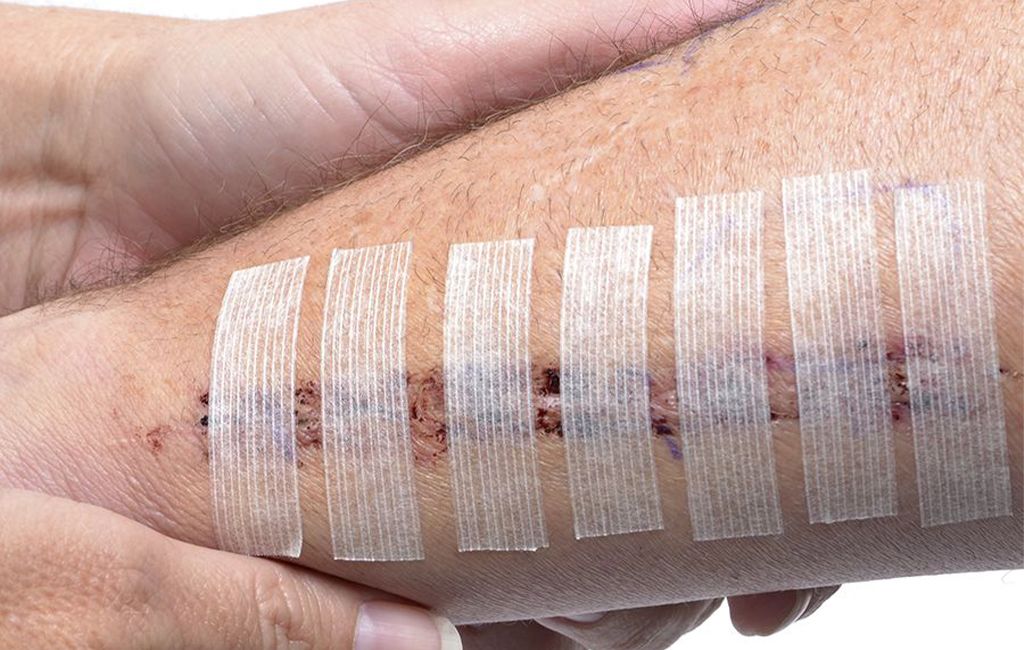
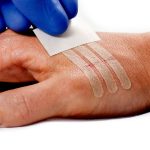
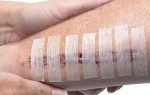
At this stage, the adhesive should be applied vertically to the wound so that the adhesive can be placed on both sides of the wound and bring them closer to each other.
If necessary, several adhesives should be used at a distance of 3 mm from each other to achieve better results.
Also, to remove and peel off the suture adhesive from the wound, it is better to wash the wound and the adhesive with a solution of hydrogen peroxide and water so that, in addition to being cleaner, the adhesive on the wound becomes softer so that it can be removed from the skin more easily.
Advantages of using suture adhesive
Using different types of suture adhesives can certainly have many advantages for doctors or even patients. Among the advantages of using it are the following:
Ease of use for different people
Saving the doctor’s time and accelerating the patient’s treatment and treatment time
Possibility of wound healing and treatment in a short period of time between 5 and 10 days
Has waterproof and hypoallergenic properties, which further helps the patient to tolerate it
No need for anesthesia during use
Easy and quick separation
In conclusion
In this article, we introduced suture adhesives, their types, and the use of each of the different models of this type of adhesive. In general, it should be said that the performance of all models of suture adhesives is the same; but the treating physician can definitely consider a more suitable type for the patient, considering the type of wound and the location of the injury, and use the appropriate model for the patient.



Reviews
There are no reviews yet.