


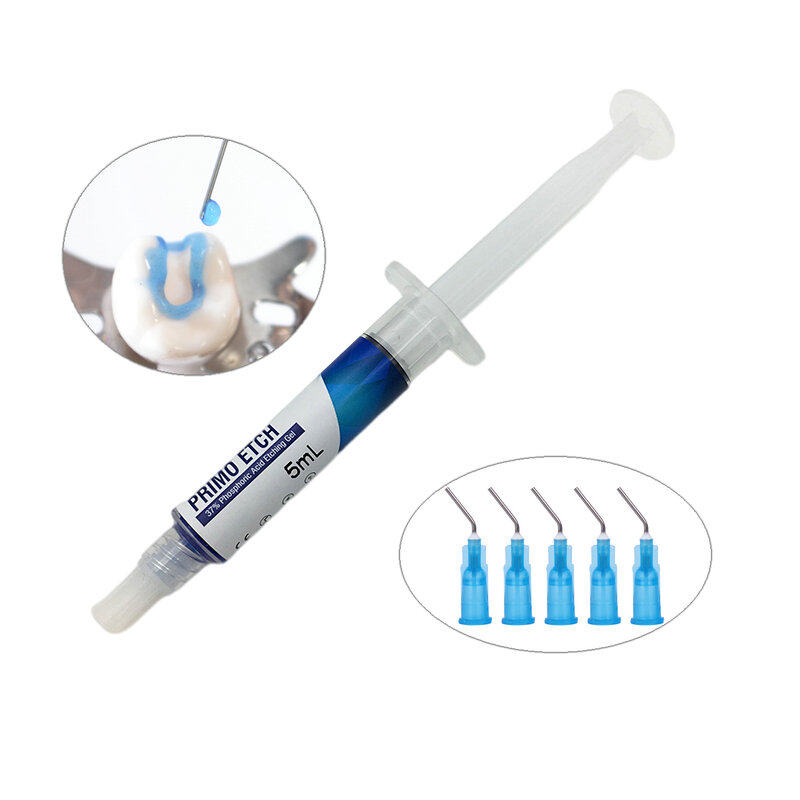


What is dental etching acid?
In the past, one of the main challenges for dentists in restorative work was the level of adhesion and the need for a suitable adhesion with high durability. In this regard, things such as humidity, temperature of the oral environment, etc., were seen as serious obstacles that were almost difficult and impossible to overcome. But later, with the production of dental adhesive, a major revolution was created in this field.
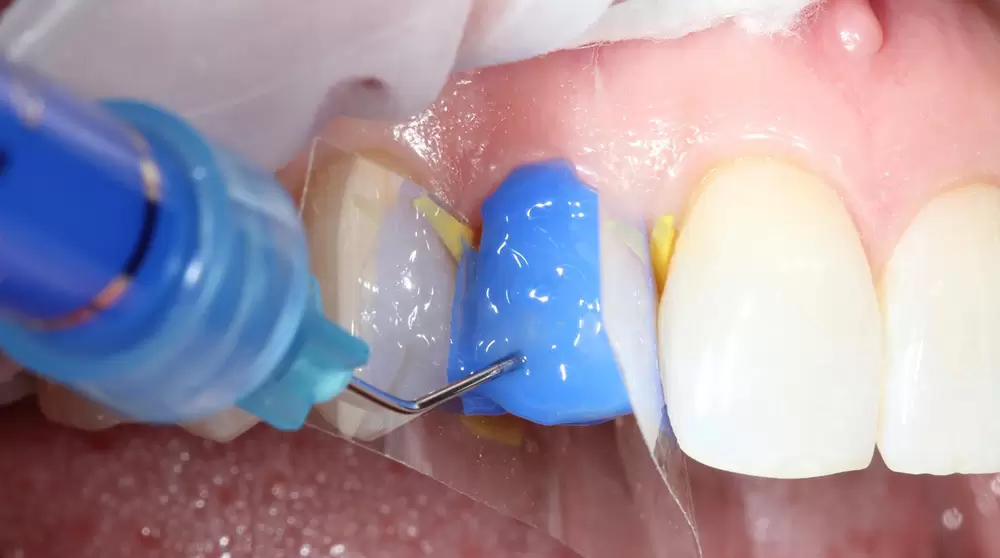
Dental etching acid is a material used to restore teeth, and among the most common of them is phosphoric acid, which is used when using a gel sample to remain fixed on the desired part of the tooth. Before filling the tooth with composite, the dentist creates very small holes with the etching acid and removes stains on the tooth so that the composite does not separate from the tooth.
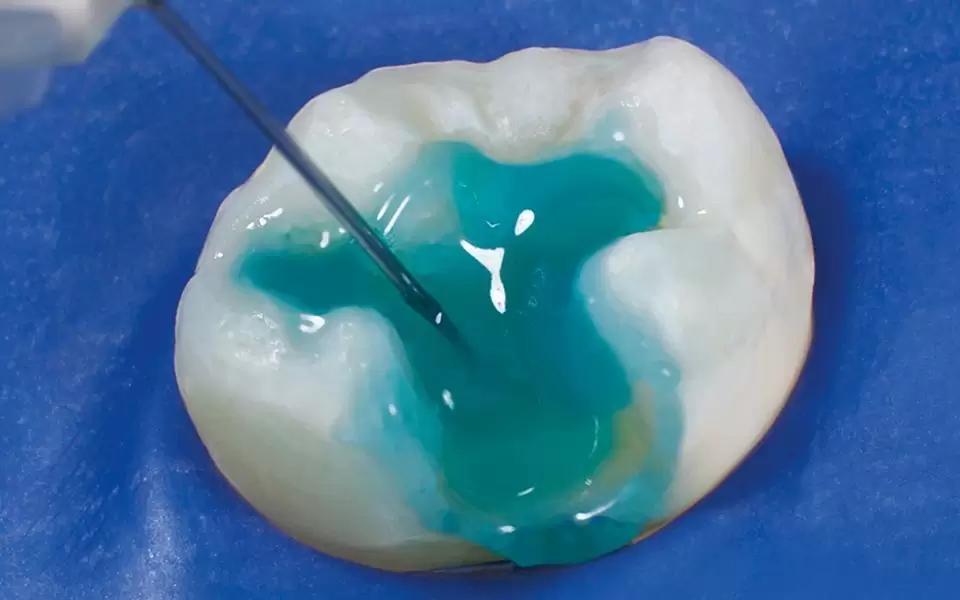
Usually, the dentist uses a colored gel so that the material and the tooth can be distinguished well. In simpler terms, it should be said that etching acid is used to improve the adhesion between tooth enamel and composite during tooth restoration, and due to its acidic properties, it may lead to sensitivity, which is one of the main disadvantages of etching acid.
Acid etchant is available in the form of phosphoric acid gel or solution on the market, of course, its most common concentration is 37 percent, but it is also available in concentrations of 15 percent and 34 percent. When the etched surface is drying, it will be matte or chalky white. Etching acid removes surface contaminants and also moistens the enamel and removes the hybrid layer and smear layer.
Main uses of etching acid
Etching acid is used when micromechanical bonding is to be performed, such as direct bond orthodontic brackets, fissure sealant placement, crowns, and gold composite restorations. Etching acid is used to remove the enamel to make the adhesive more effective. It takes 15 seconds to etch the teeth, but some products consider 20 to 30 seconds to etch the enamel and introduce 15 to 20 seconds as the time to etch the dentin. Buying etching acid has been an essential equipment in dental offices and centers, which will greatly help the dentist in restoring the teeth.
Note: Etching acid is available in syringes or bottles, gels, and liquid solutions, which are rarely used in liquid solutions and are more popular for their easier application than gel-based solutions.
Before using etching acid, the surface must be completely clean and no prophylaxis paste must be used, as this may interfere with the bonding properties. Another characteristic of etching acid is that it is sensitive to moisture, which should not be overlooked.
One of the main disadvantages of etching acid is the presence of phosphoric acid in it, which leads to its acidity. When a dentist wants to use etching acid on a patient, he must use safety equipment and also be careful not to let etching acid come into contact with his own skin or the patient’s skin and eyes, as this can lead to serious injuries.
If etching acid comes into contact with the eyes, it must be washed thoroughly with detergents, but if these materials are not available, the eyes must be washed with water for 20 minutes; The presence of water can dilute the acid and cause less damage to the eyes (etching acid should never come into contact with the eyes or skin).


Reviews
There are no reviews yet.