


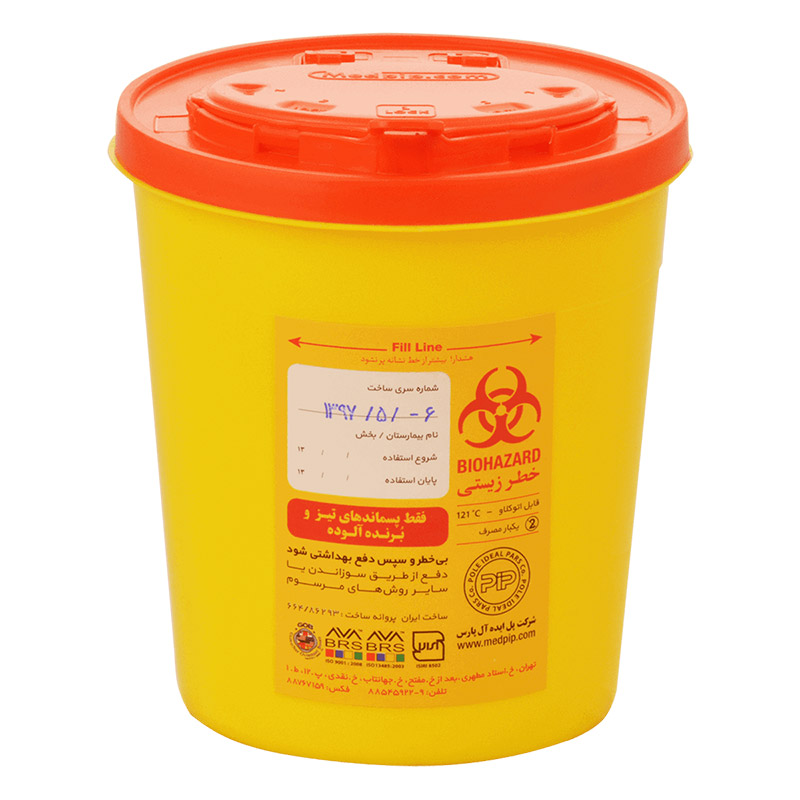
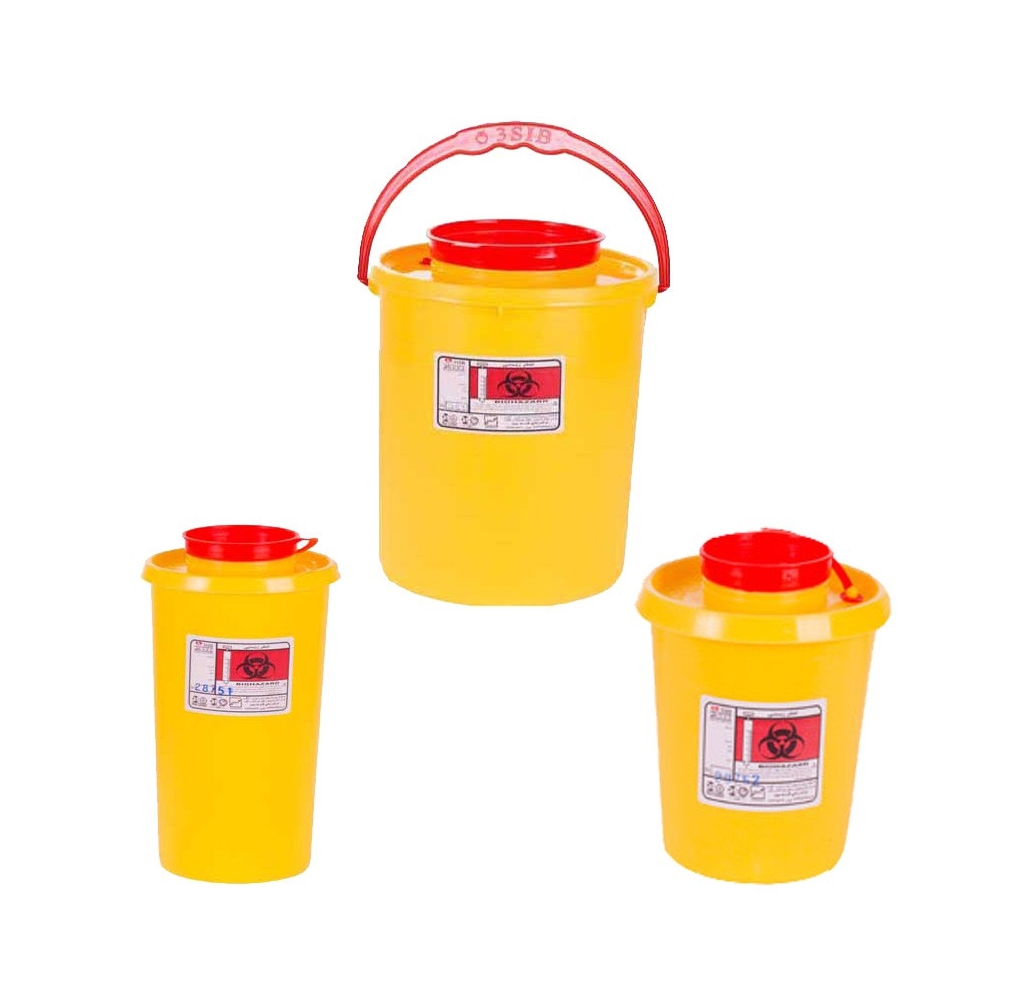
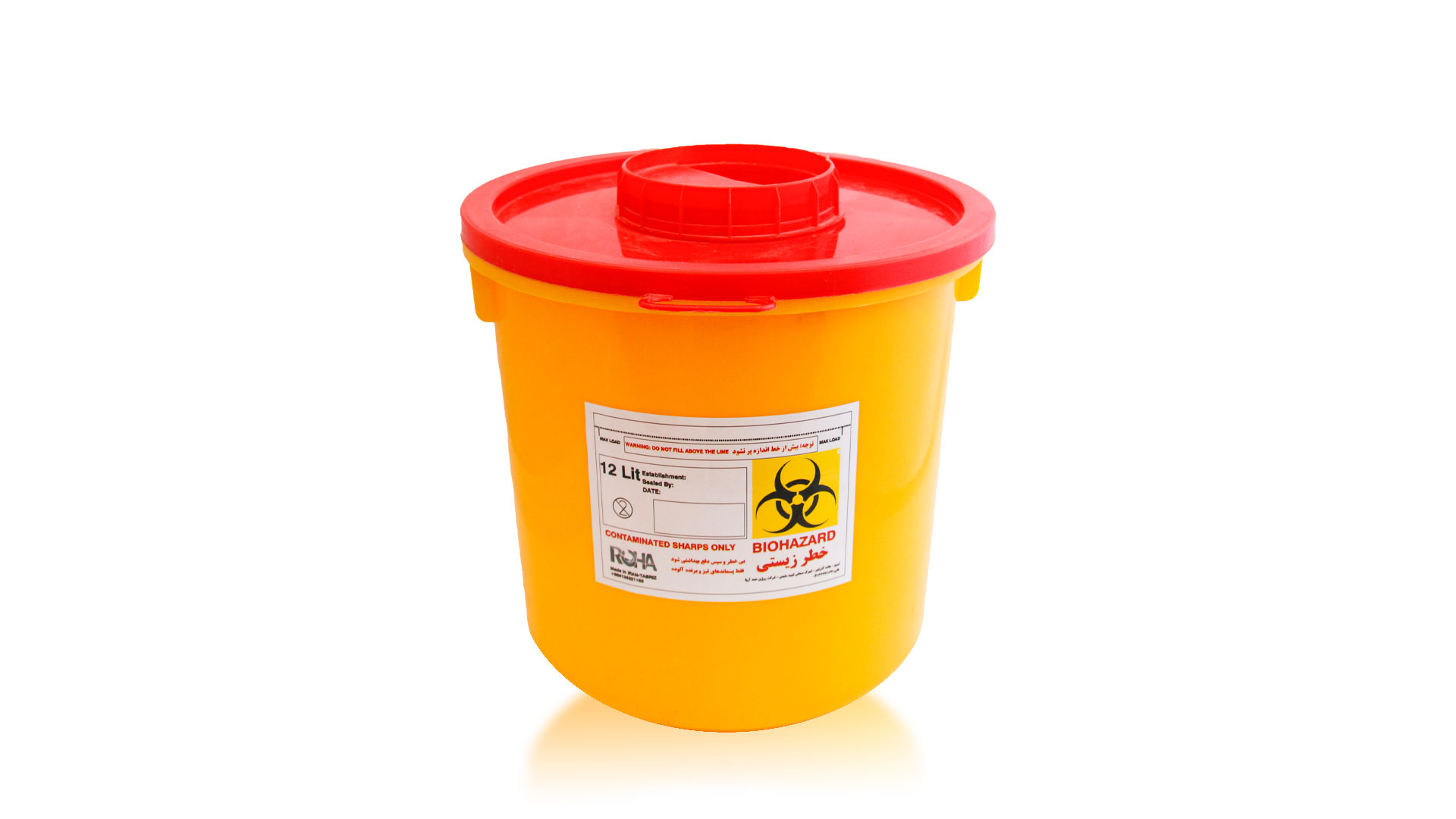


Safety boxes are produced in various shapes and sizes, such as rectangles, squares, and cylinders, to accommodate a variety of sharps waste. These containers are usually made of polymer materials that are highly resistant to impact, pressure, breakage, and puncture. Some of the important features of these containers are:
Temporary and permanent locks: The opening of the safety boxes has a temporary lock that is closed when not in use to prevent waste from falling out. Once the container is full, the permanent lock is activated to completely prevent waste from escaping.
Standard marking: These containers have marking lines that indicate the maximum filling capacity. Filling more than the allowed limit can lead to the leakage of contaminants into the environment.
Disposable: Once filled, safety boxes should be disposed of in an appropriate manner with other hospital waste, for example by incineration.
Environmentally friendly: These containers are made of materials that pose the least risk to the environment.
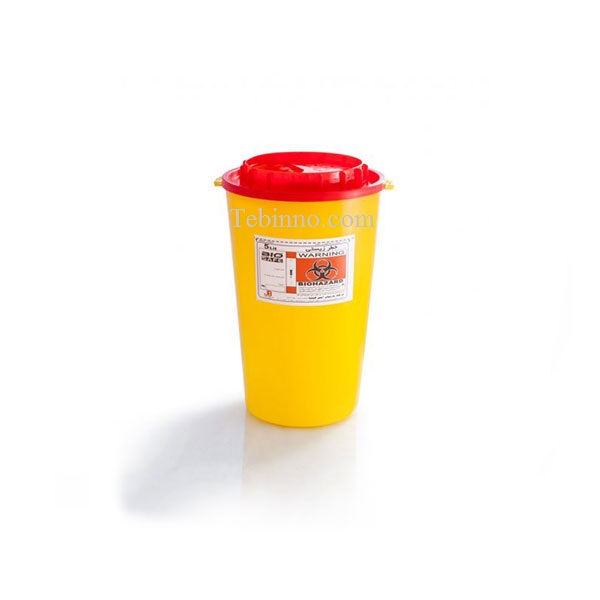
Types of safety boxes
Safety boxes fall into two general categories:
Autoclavable: These types of safety boxes can be sterilized in autoclaves. The autoclaves use high pressure and temperature to sterilize equipment.
Non-autoclavable: These types of safety boxes cannot be sterilized and must be discarded after use.
Important points in using a safety box
Filling to the mark: Hospital waste should not be filled beyond the mark line on the body of the safety box.
Locking the lid: After the container is filled, its lid is placed upside down on the body and locked to prevent waste from falling out.
Storage in a dry place: Safety boxes should be stored in a dry place away from moisture and chemicals.
Using a holder base: Various holder bases are used to keep safety boxes fixed on the table and prevent them from moving.
Closing the temporary lock: When the safety box is not in use, the temporary lock of the opening is closed to prevent possible waste from escaping.
Advantages of using a safety box
Reducing environmental pollution: By collecting and storing sharp waste correctly, environmental pollution is minimized.
Hazardous waste separation: Safety boxes allow the separation and separation of hazardous hospital waste.
Easy to carry: These containers are designed in such a way that they can be easily transported.
High resistance: The polymer materials used in the manufacture of these containers make them highly resistant to impact and pressure.
Environmentally friendly: These containers are made with environmentally friendly materials and do not pose a risk to the environment if used correctly.
Safety boxes are vital medical equipment in hospitals and medical centers that play an important role in maintaining the safety and health of medical staff and patients. These containers, with their special design and use of resistant materials, allow for the safe collection of sharp and hazardous waste and prevent the transmission of dangerous diseases.


Reviews
There are no reviews yet.